

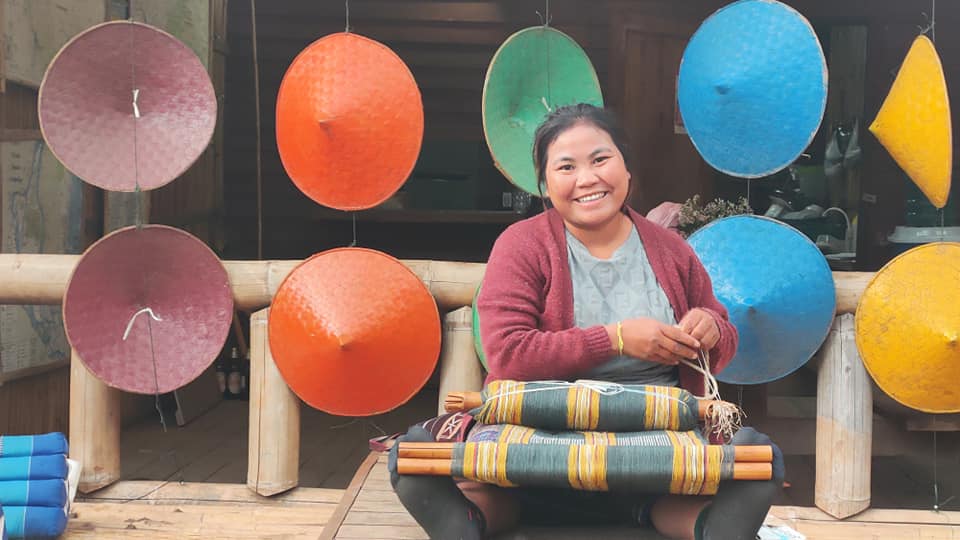
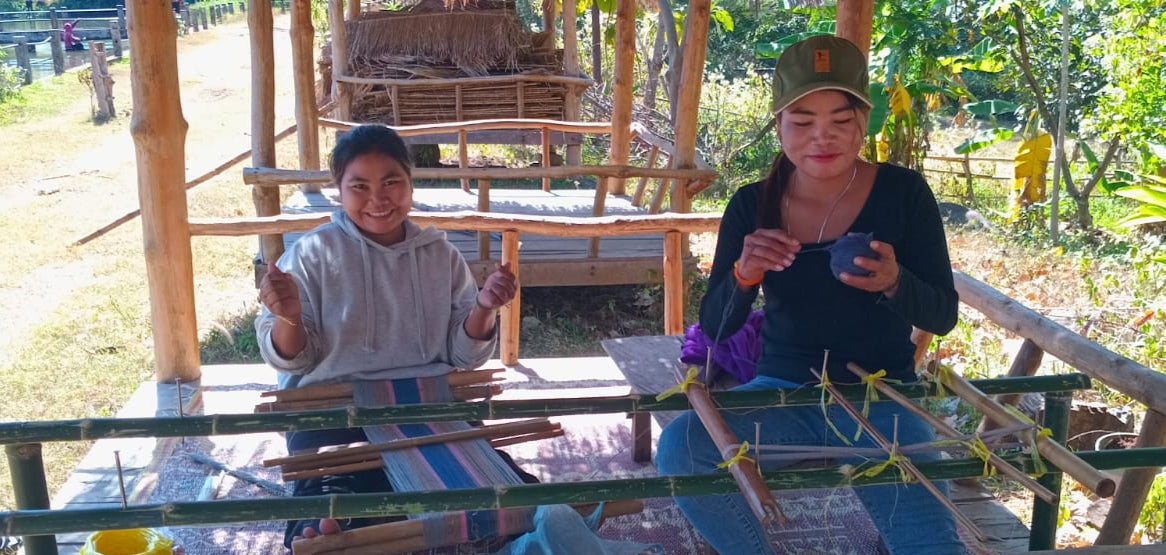
Sydachan and her sister Southsada are coordinators of the village's 10-woman cooperative. They gather the village's fabric production, are weavers themselves, take orders and make them or have them made by other women in their community. They aim to become independent in marketing, trained in English and in contact with travelers.
-
 Sydachan
 -
 Southsada


Katu villages are often isolated and difficult to access , scattered across hills and mountainous forest areas , from the Bolovens Plateau to the Annamite Mountains .
The traditional houses are built on stilts , made of wood and bamboo , arranged in a circle around a carved communal house , used for rites and collective meetings .

Katu society is organized along patrilineal clan lines : property and status are passed down within the clan , and strict rules govern inter-clan marriages .
Their beliefs are animist : each natural element ( forest , rivers , spirit of rice , ancestors ) is inhabited by spirits called Yung and Brao .
Major ceremonies include the sacrifice of the buffalo , celebrated around the communal house , in honor of the spirits and to ask for protection and prosperity .

Katu women are known for their skill in backstrap weaving : they spin local cotton , dye it with plant pigments , then weave fabrics decorated with traditional beads .
Weaving often includes small beads threaded into the weft , each pass delicately incorporating these elements, which requires patience and technical precision .
The textile decoration is composed of narrow bands or symbolic patterns where pearls and natural colors tell the story of the Katu environment and cultural universe.

The Katu live mainly from slash-and-burn agriculture (rice, cassava, vegetables), supplemented by fishing , hunting and livestock farming (pigs, buffalo), often linked to ritual offerings .
Traditional weaving is passed down from mother to daughter in a domestic setting. It constitutes both a cultural pillar and a source of income for communities.
Faced with the challenges linked to isolation , acculturation and the effects of modernization (roads, tourism, youth migration), several local actors (NGOs, solidarity tourism projects) are mobilizing to promote this textile heritage and guarantee its preservation .
-
 Eco-responsible
Handicrafts from here and elsewhere
-
 Community involvement
We support women in Southeast Asia
-
 Secure payment
Order and pay securely online
-
 Fast delivery
Fast delivery from Monday to Friday in France and Europe
