



Thanks to the recent developments initiated by OFW, the Cooperative has just expanded from 9 to 22 women. The women produce cotton, spin it, dye it and then weave it. The manager is launching into local marketing.
Since March 2019, TrendEthics has been working with the NGO Entrepreneurs du Monde , which has a branch in the province of Dien Bien Phu in Vietnam, to set up a weaving cooperative for a village of the Lao ethnic group.
-
 Pang
PangShe is the oldest member of the cooperative and is in charge of dyeing! She worked with Doi to find the best recipes for the natural color catalog.
-
 Pom
Pom
Pom knows how to ride a motorcycle, which makes her an excellent coordinator! She receives orders and gives instructions to the other weavers, then takes care of shipping the fabrics. -
 Vi Thi Tich
She learned to weave at the age of 13 or 14 and has been weaving every day since. She has cotton trees in her fields.
Before joining the cooperative, she worked from home, selling to a woman in the village, but earned very little. She hopes that by joining the cooperative, she will be able to preserve her culture and generate more income for her household.
-
 No
NoLike the other women, she lives in a wooden house on stilts. She learned weaving from her mother.
-
 Doi
DoiShe is the tallest in the cooperative. Doi knows a lot about dyeing, but she also loves weaving.
-
 Giot
GiotShe is proud of her culture and enjoys weaving from her home.
-
 Vi Thi Xien
She started weaving around the age of 13 with her mother who passed everything on to her.


Longtemps délaissée, la culture du coton renaît aujourd’hui. Les tisserandes cultivent une matière première locale, naturelle et sans intrants chimiques. Elles renforcent ainsi leur autonomie, tout en faisant revivre une pratique profondément liée à leur territoire.
Après la récolte, chaque étape est réalisée au sein de la coopérative. Les femmes préparent et filent le coton, élaborent des couleurs à partir de végétaux, puis teignent patiemment les fils. Sur leurs métiers à tisser, elles donnent enfin naissance à des étoffes ornées de motifs traditionnels, porteurs de leur histoire et de leurs valeurs. De la graine au tissu, elles maîtrisent ainsi toute la chaîne de production.

The Lao share a classic family social organization of the Tai peoples: villages (ban), chiefdoms (mueang or muong), each headed by a local Chao.
The society is communal, with strong family roots, without large-scale structured clans.
They mainly practice irrigated rice agriculture, supplemented by livestock farming, fishing, and gathering. Some also practice blacksmithing or traditional pottery.

The Lao language belongs to the Tay-Thai group, close to the Lao spoken in Laos; despite a modest diaspora in Vietnam, the language retains its specificities and its own identity.
The Lao combine Theravada Buddhism with animist traditions related to fortune-telling or spirits (Satsana Phi). Festive ceremonies include dances (lam vong, folk dances) and traditional songs, accompanied by instruments such as drums, trumpets, lutes or flutes.

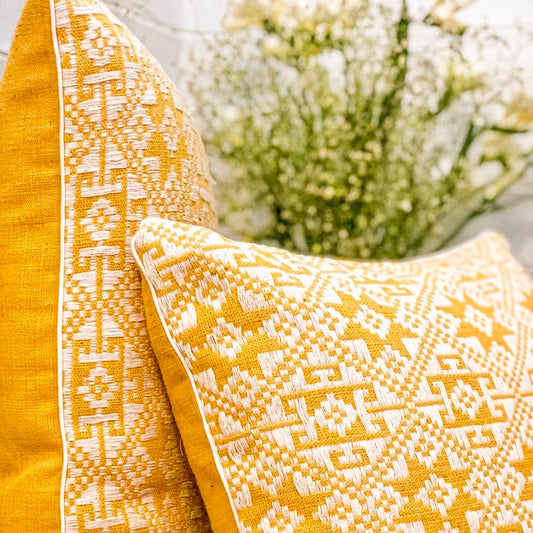
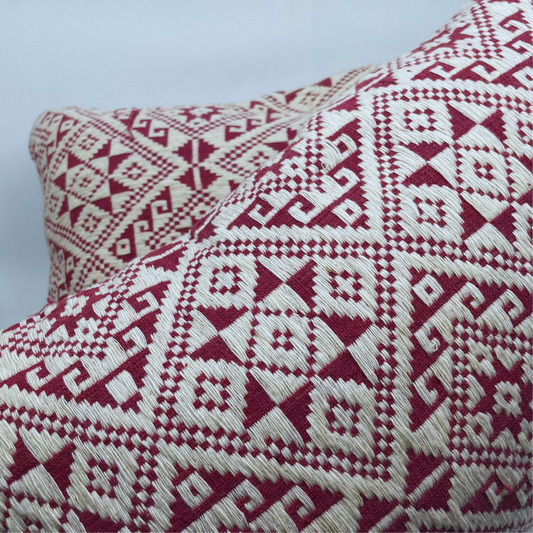
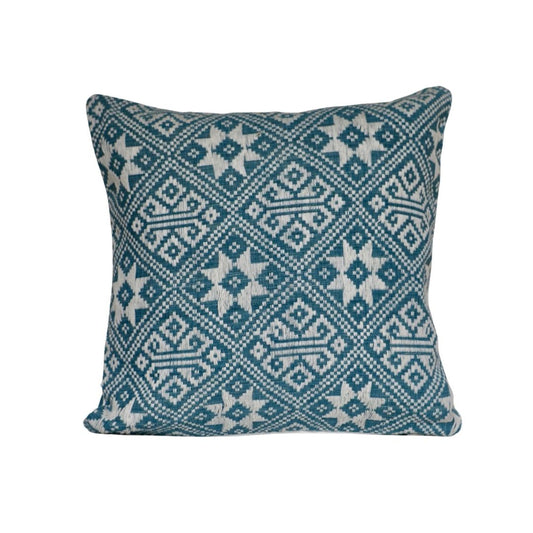
Embroidered weaving (brocade) is an essential skill, particularly prized. Lao women produce traditional clothing decorated with stylized motifs (leaves, birds, flowers), embroidered on cotton or linen skirts and blouses.
The patterns carry symbolic meanings; the Dien Bien state recently officially recognized the art of Lao clothing decoration as national intangible cultural heritage.
Traditional embroidery now provides a stable source of income for women, through the sale of handmade fabrics to visitors or through cooperatives.


-
 Eco-responsible
Handicrafts from here and elsewhere
-
 Community involvement
We support women in Southeast Asia
-
 Secure payment
Order and pay securely online
-
 Fast delivery
Fast delivery from Monday to Friday in France and Europe
