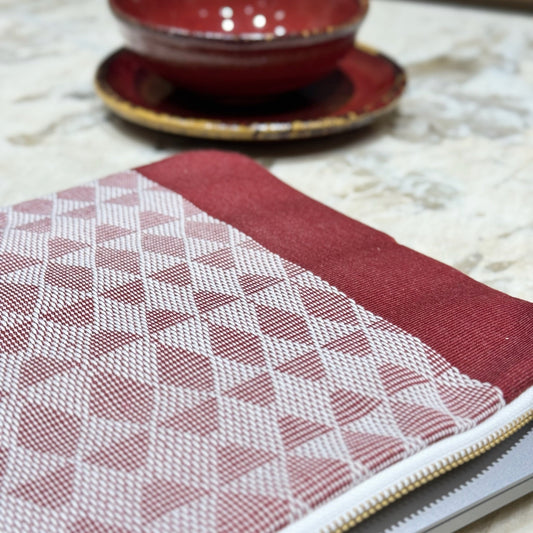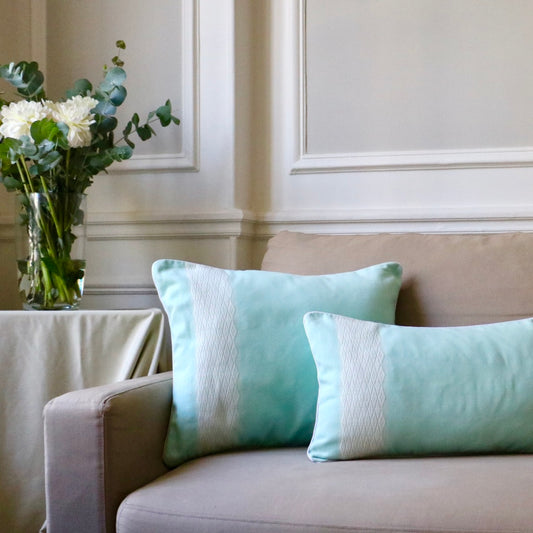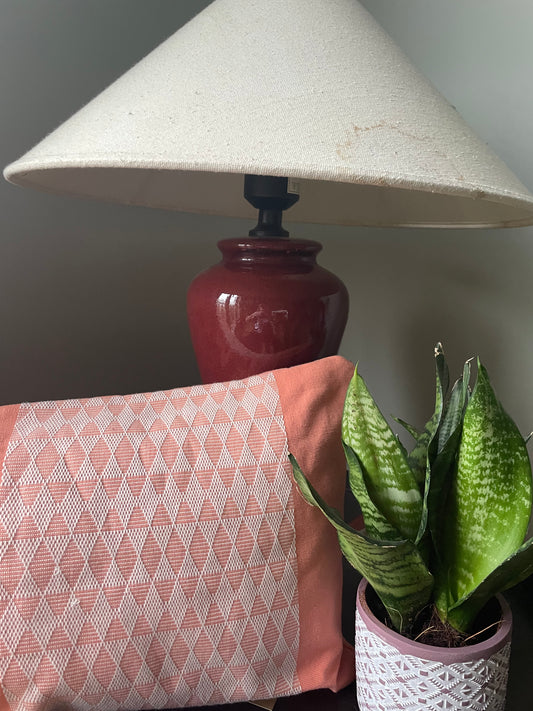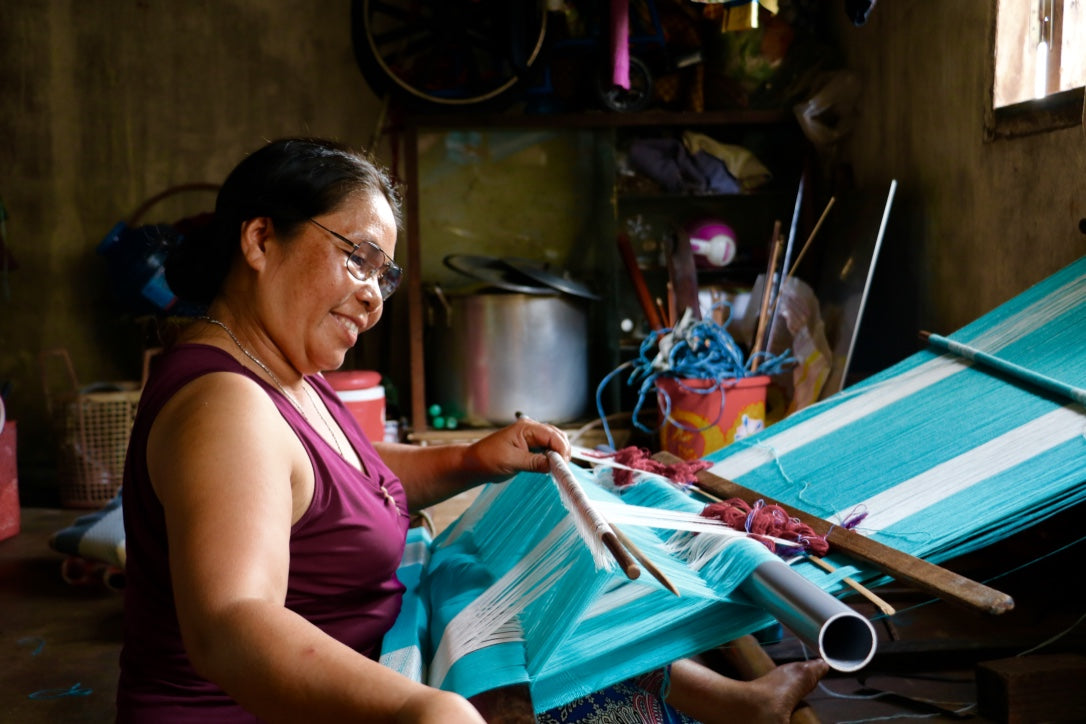
10 weavers are part of this cooperative: Ami Tia, Ami Car, Ami Xuan, Ami Juel, Ami Hyut, Ami Ysar (leader of the cooperative because she speaks English), Aduon Kieu, Aduon Ythu, Ami Hnoar and Aduon Ypong. They are delighted to see traditional patterns decorating French interiors!
-
 Friend Ysar or HPlier
HPlier is a dynamic woman who, outside of her teaching career, is passionate about weaving and maintaining EDE culture. She seeks opportunities for weavers and produces items for the local community. The partnership with Opportunity for Women helps them expand their market and adopt a more eco-responsible approach.
-
 Friend YTia or H'Groc
Ami YTia is the name of her son YTia, but his real name is H'Groc! Not easy to find your way around. She wove the turquoise cushions with bird flight patterns.
-
 H' Min Nie or Friend H'Noar
 -
 H' Biam Hdoc or Aduon H' Kieu
 -
 H' Po Hdoc or Friend H' Kieu
 -
 H' Po Hdoc or Friend H' Kieu


Ede society is matrilineal : the line is transmitted through women . After marriage, the man goes to live with his wife and the children take the mother's name .
The main role within the family is assigned to women: they hold economic and symbolic power , notably through artisanal practices .


Weaving is a predominantly female activity , and the know-how is passed down from generation to generation , usually from mother to daughter from adolescence . Locally grown cotton fibers are spun , then dyed with natural pigments (bark, roots, indigo). The fabrics are mainly woven on backstrap looms. similar to those used in Indonesia.

Ede fabrics feature geometric patterns inspired by nature —flowers, leaves, animals, stilt houses— stylized in an abstract manner . The dominant colors are black , red , yellow , white (from natural pigments ), with occasional blue or green depending on the available dyes.
The most complex patterns , such as the Kteh technique , are reserved for ceremonial clothing and require great precision and longevity : up to 4 months of work for a complex textile.

The current challenge for the Ede community is to preserve traditional weaving in the face of modernization , the increasing use of industrial yarns and the erosion of know-how .