The majority of Kachin today convert to Christianity (between 65% and 95% ), despite the persistence of animist elements and ancient spiritual traditions .
The Manau festival , celebrated in particular in Myitkyina and Laiza , is a central moment of community gathering and cultural celebration . A true ritual of unity , it is marked by circular dancing around symbolic decorated poles and traditional songs .


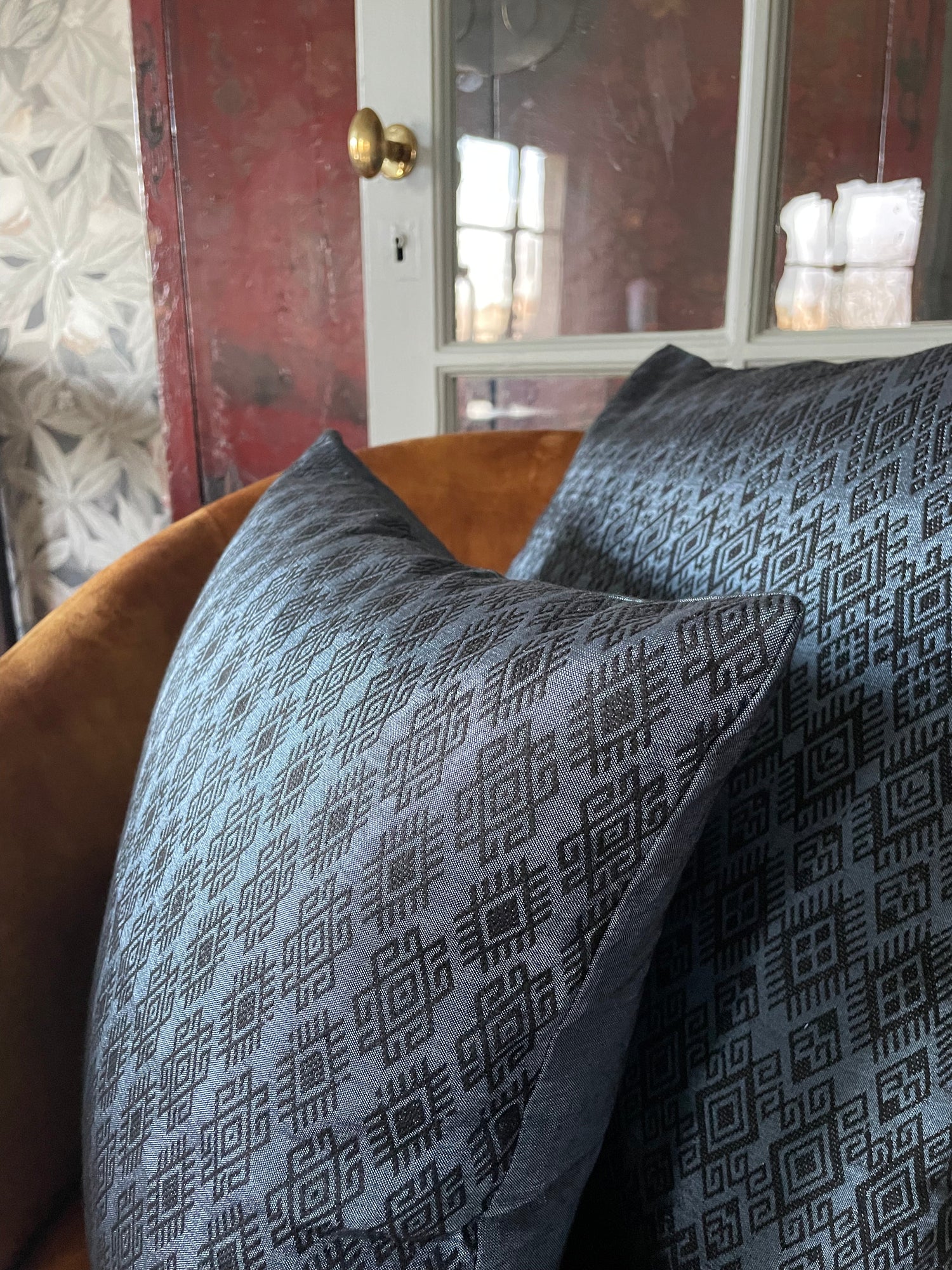
Weaving is primarily the work of Kachin women , who use backstrap looms or regulated frame looms to create fabrics with floral or geometric patterns .
Traditional clothing —such as the longyi worn by both men and women—features colorful, intertwined patterns , often woven from local cotton , and enhanced with silver details (coins, medallions, beads), especially for Jinghpaw women.
The black kopi ( eingyi ) jacket , decorated with silver medallions covering the shoulders and chest , is emblematic of Kachin clothing identity .

Traditional weaving is an integral part of domestic and ceremonial life . It is taught from adolescence , often from mother to daughter , in a family or community setting .
In the camps for internally displaced persons (IDPs ), particularly around Myitkyina , women gather in weaving workshops to create textiles for sale, thus generating essential income in times of hardship .

The armed conflict in Kachin State has displaced hundreds of thousands of people , challenging access to raw materials and cultural transmission networks .
Despite the difficulties, textiles remain a powerful vector of cultural resilience . Artisanal production also sometimes serves as a basis for aid or local revaluation projects.